
Westerline
Meta · Offer-First Banner
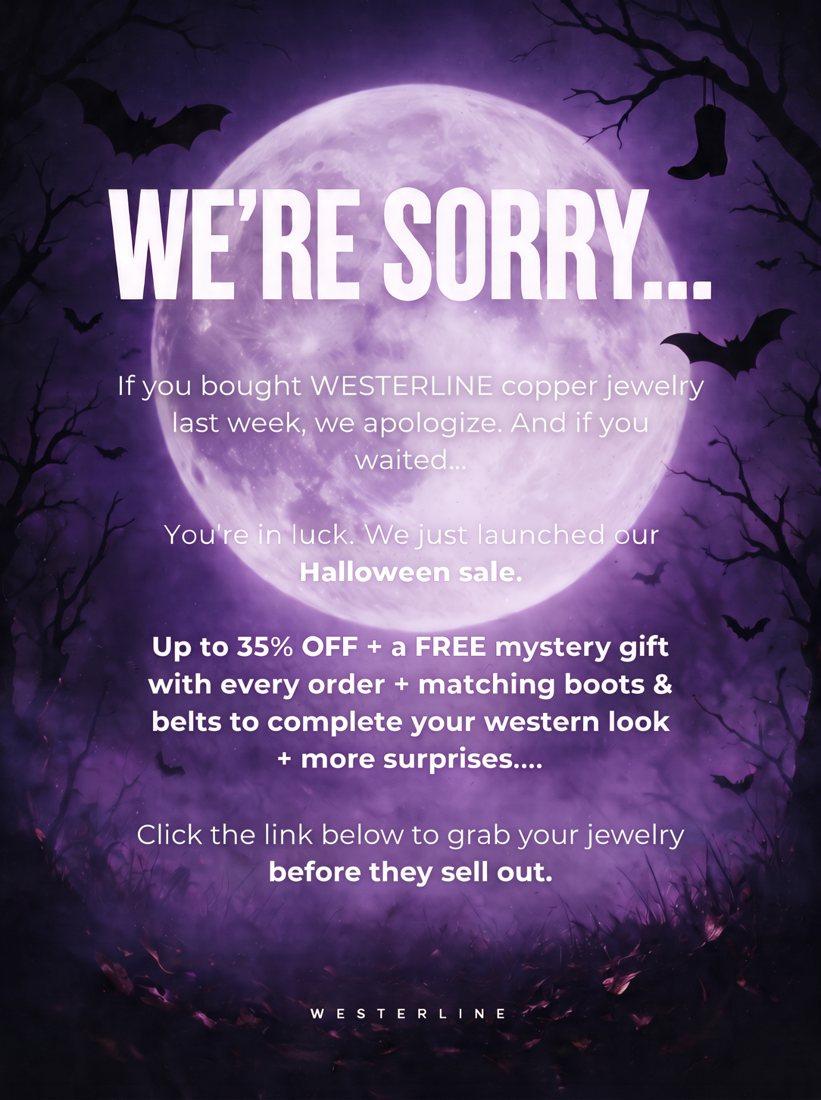
Ad copy
I thought copper bracelets were nonsense. Then I read everything ever written about them.
I Thought Copper Bracelets Were Nonsense. Then I Read Everything Ever Written About Them. I sell copper jewelry. I'm going to open by telling you the thing that costs me money. In 2009, researchers at the University of York ran a randomised trial. Forty-five people with osteoarthritis wore a copper bracelet for five weeks, then a fake one that looked identical, then a magnetic wrist strap. Nobody, including the researchers, knew which was which until the end. The result was nothing. No measurable difference in pain, no difference in stiffness, no difference in how much medication anybody took. The advertising regulators have been just as blunt. Companies in this category have been fined and pulled off air for saying a bracelet reduces symptoms, and the rule is simple: if you claim a medical effect, you produce the clinical trial. Nobody has produced one. So here it is in plain language. If a copper jewelry company tells you their bracelet will reduce your joint pain, they are either lying to you or about to be fined. I know that. I still sell these. Here's why. THE THING NOBODY EXPECTS YOU TO NOTICE I went and read what actual wearers write. Not testimonials on a brand's own website. Independent reviews, forum threads, the comment sections under other people's ads. Thousands of them. What surprised me wasn't that people said it helped. It's how they said it. "I don't know if it's the copper or if it's in my head, but my thumb hasn't woken me up in three weeks." "Placebo or not, I'll take it." "My mother swore by hers. I thought she was daft. I'm wearing one now and I'm not taking it off." They hedge it themselves. Nobody in those threads is being fooled. They're adults who know exactly what the evidence says and are reporting what they noticed anyway. The people most convinced are the ones who bought it as a gift for somebody else and ended up buying a second one. And there's a pattern in where they wear it. Hands. Wrists. Thumbs. Knuckles. Almost never knees, almost never backs. It's the one part of your body you look at forty times an hour, on the one piece of jewelry you never take off. An effect from a known placebo is still an effect. Nobody gets less relief because a study explained the mechanism. If a $30 ring on your finger makes your morning easier, the journal reference isn't the part you care about. That's as far as I'll take it, and I'm not going to take it further. I'm not a doctor, this isn't a treatment, and if something hurts you should talk to somebody who went to medical school. WHAT COPPER DOES DO, BORINGLY Copper is an essential mineral. Your body needs it, it's in your food, and it's involved in connective tissue and in how your body uses iron. That's biology, not jewelry. Copper as a surface is a different story, and a well-documented one. Copper kills bacteria on contact. It has been used to hold drinking water for thousands of years for exactly that reason, and copper alloy surfaces are formally registered in the US as antimicrobial materials. Hospitals put copper on door handles because of it. That is a fact about the metal on your wrist. It is not a claim about your bloodstream, and anybody stretching it into one is stretching it. THE ACTUAL FRAUD IN THIS CATEGORY It isn't the copper. It's the fake copper. Here's the ladder. At nine dollars you're buying plated zinc alloy. At nineteen you're buying plated steel, which is the one that fools people, because it's heavy and heavy feels real. At twenty-nine you're usually buying copper-plated brass. Somewhere past forty you start finding solid copper, and even then you have to check. Plating thickness on cheap jewelry runs somewhere between five and forty microns. A human hair is about seventy. That is the entire amount of copper in a nine-dollar "copper" bracelet: less than a hair, sprayed over something else, and it comes off on your wrist. This is why the single loudest complaint in this whole category isn't "it didn't work." It's "it went black and then it went silver underneath" and "I can't tell if this is even copper." FOUR SECONDS TO FIND OUT Go get a fridge magnet and hold it against the piece. Copper is not magnetic. It cannot be. If the bracelet grabs the magnet, there is steel under there and you've been sold plating. Ours is solid 99.9% copper, so the magnet slides straight off the outside. Turn one of our magnetic pieces over and it snaps hard to the small inlays set into the inside, because those are the only magnetic thing on it. Plated steel fails that test twice over: everything grabs. Solid brass fails it the other way: nothing grabs anywhere, including where the magnets should be. Two more checks, both free. Scratch it somewhere it doesn't show: solid copper is the same colour underneath, plating goes silver or yellow. And weigh it in your hand against a coin. Copper is dense. Zinc alloy is light and it feels light. ABOUT THE GREEN MARK Real copper sometimes leaves a green mark on your skin. Fake copper does it too, so it isn't the giveaway people think. It's copper reacting with moisture and the acids in your own sweat, which is why one person gets it and the person next to them never does. It washes off with soap, it doesn't stain, and it isn't harmful. If it bothers you, wipe the inside of the piece dry when you take it off, or take it off before the shower and the pool. Chlorine is what really goes after copper. HOW TO BUY ONE, FROM SOMEBODY WHO SELLS THEM One. Make them say 99.9% and make them say solid. "Copper finish", "copper tone" and "copper-infused" are all words that mean not copper. Two. Do the magnet test the day it arrives. Three. Buy the piece you like the look of, not the one with the biggest promise on the ad. You'll wear it every day or you won't wear it at all. Four. Buy from somebody who takes it back. If a company won't give you thirty days, it's because they know what arrives in the box. WHAT WE MAKE Solid 99.9% copper, hand-finished, in small runs. Rings from $24.95, bracelets and cuffs from $29.95, necklaces to $69.95, two-piece sets at $54.95. Seven of our pieces carry magnets, set flush into the inside where you barely feel them: the Hitch and Lucille rings at $24.95, the Lariat bracelet at $39.95, the Hattie at $49.95, the Latigo and Rowel sets at $54.95 and the Pinto bracelet at $59.95. We fit them because customers ask for them. We're not going to tell you what they do. It will darken. That's the metal, not a defect, and it's the fastest way to tell it apart from the plated version on the next page. Half a lemon and a pinch of salt brings it back bright whenever you want. Free tracked shipping to the US, Canada, the UK, Australia and New Zealand. Thirty days to send it back. Eighty-two reviews, averaging 4.7. "I thought she was daft. I'm wearing one now and I'm not taking it off." Go get a magnet first. Then pick the one you like.
Call to action: Shop now
Creative notes
Why it fits
This composition uses a strong emotional apology hook combined with a seasonal Halloween theme to engage viewers. The clear offer of a discount plus free gifts and complementary products makes it a useful reference for promotional campaigns targeting holiday shoppers.
Copy structure
Headline WE'RE SORRY... → Apology and intro text → Halloween sale announcement → Offer details (discount + free gift + matching items) → Urgency call to action → Brand name
Elements to replace
headline; apologyText; saleAnnouncement; offerDetails; callToAction; brandName
Adaptation guidance
To rebuild this mechanism, use the customer's original brand name and tailor the apology message to their recent customer experience. Incorporate a relevant seasonal or event theme and clearly present a compelling offer with multiple benefits and a sense of urgency.
Ad details
Original creative belongs to Westerline. Recreate the idea with your own copy and imagery.