
Dr. Margaret Ellis
Meta · UGC Selfie
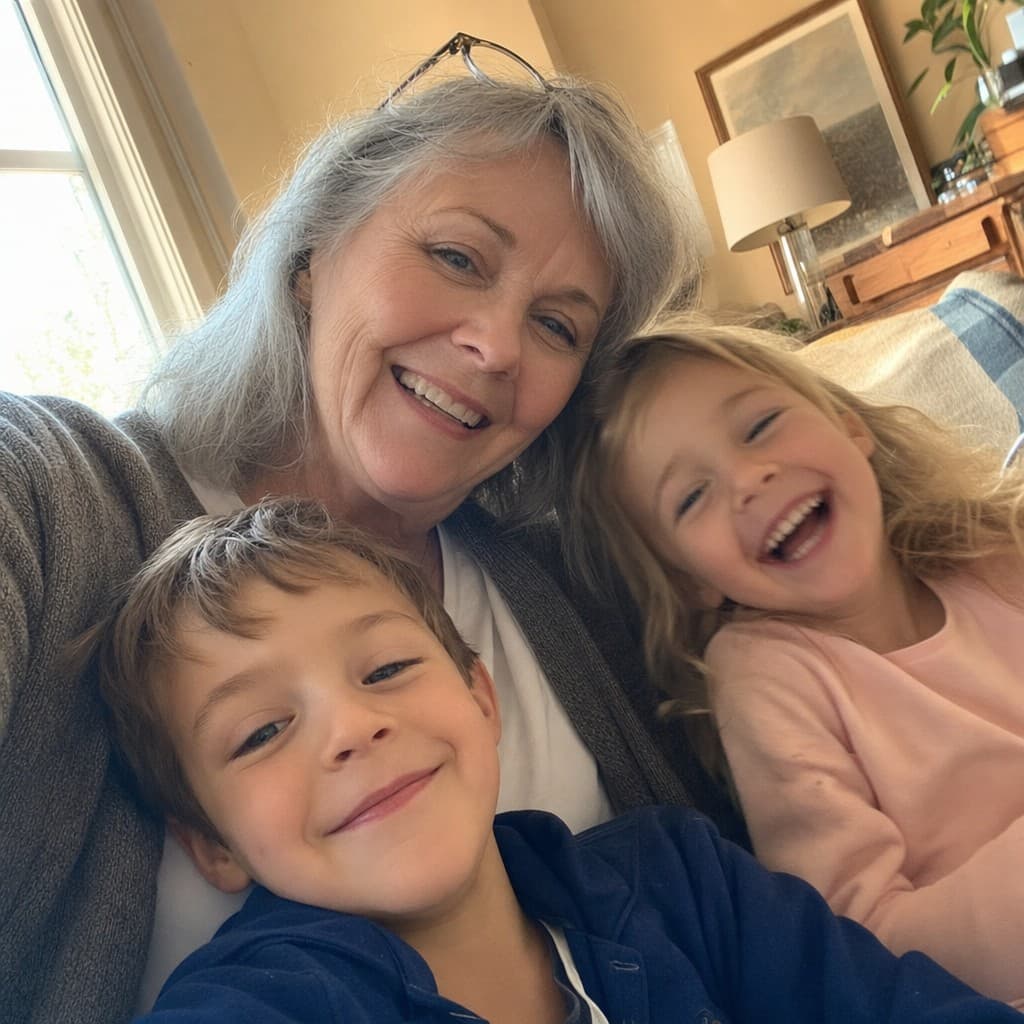
Ad copy
Is your Persimmon soap real?
Please DON'T buy persimmon soap. I'm begging you. Not one more bar. Not until you've read this. My name is Dr. Margaret Ellis. I'm a geriatrician and I've been doing this for 22 years I want to be clear about something before I say anything else. I don't recommend products. My patients will tell you that. When I finally do tell someone to buy something, it's because I've watched it work, over and over, for years. Which is why what happened last year bothered me so much. But let me start from the beginning. I did part of my training at a geriatric hospital in Japan. Part of the reason why I went to Japan was to find out why they live so long. What I found was, a big part of that is that they are extremely comfortable and confident with aging, you would love to see how most of them go so confidently into their 90's And this isn't just a feeling. There's real research behind this. How you feel about aging changes how you age. In the most famous study, people with a positive view of getting older outlived the people who feared it by around seven and a half years. Which is exactly why the next thing I learned in Japan stuck with me. Because there is one thing that can quietly take all that confidence away That's where I first heard a word we don't have in English. Kareishu. Aging odor. In Japan, nobody pretends it isn't real, it's common sense there, the way gray hair is common sense. Everyone knows that around sixty, your skin starts making a compound called 2-nonenal. Everyone knows what it smells like. And everyone knows what to do about it. Because they've been dealing with it for centuries. The answer there has always been the same. A soap made from fermented persimmon. They call it kakishibu. Unripe persimmons, pressed, then left to ferment for months, until they're full of tannins. And tannins are one of the only things that actually grab onto nonenal At the hospital, nurses handed those bars to patients the way we hand out blood pressure pamphlets. Then I finished my training, came home, and learned something strange. Here, none of this existed. No word for it. No pamphlet. In 20 years of practice, not one patient has ever brought it up with me first. But I would watch what it did every single week. One of my patients taught second grade for 41 years. Then one September the school gave her class to a teacher half her age and called it restructuring. It took her months to get the real reason out of her principal. Parents had complained about a smell. Patients noticing their grandson's hugs getting shorter. Family becoming more and more distant. So I did the only thing I could. Quietly, in my office, I started telling people about persimmon soap. I've been doing it since the year I opened my practice. Back then my patients had to order it from tiny importers and wait weeks for it. But it worked, over and over, right in front of me. For twenty years it was the one product I broke my own rule for. Then, about a year ago, everything changed. Persimmon soap was suddenly everywhere. Suddenly, patients were asking me about it. People walked into my office holding their phones, showing me ads. After twenty years of explaining kakishibu from scratch, I didn't have to convince anyone anymore. You have to understand what that means in my office. Telling a patient about aging odor is the most delicate conversation I have. I am telling someone they carry a smell they cannot smell. So when patients started bringing it up themselves, it honestly felt like a relief. Last year alone, sixty-one of my patients bought a bar on my recommendation. I know the exact number, because I keep track of everything I recommend. Then the calls started. "Be honest with me, doctor. Was this supposed to do anything at all?" By the end of the year, nineteen of those sixty-one patients had left my clinic. A few told my receptionist why. Most just stopped booking. One woman had been with me for eleven years. On her way out she said she didn't need "this old people smell nonsense." Eleven years, gone. And I had no answer. Same soap, as far as I knew. Same instructions I'd given for two decades. It had never failed like this. So I did something I've never done in my career. I started calling the ones who would still take my call, and I asked them to bring me what they had bought. The first bar arrived on a Monday morning. A patient named Ruth set it on my desk, still in its box. And the moment I put my eyes on that bar I knew something was wrong. That bar was bright orange, looked like a block of cheddar The Kakishibu I knew from Japan was nothing like that. So I did the test the nurses in Japan taught me. I carried her bar to my office window and held it up against the light. The light hit it and stopped. Nothing came through. Real kakishibu is translucent. Hold it to a window and the light passes straight through it, and it glows amber, like honey held up to a lamp. The next day I brought my own bar from home and held them side by side at the same window and sent her a photo. Mine glowed. Hers might as well have been a brick. Two more patients brought theirs in that week. Different brands, different boxes. Same brick. Not one of them had ever touched the thing I was recommending. Here's what they'd actually bought. Juice soap. Ripe persimmons pressed for juice, stirred into an ordinary soap base, dyed orange. And juice has none of the tannins. The tannins come from fermenting the unripe fruit for months. Skip the fermentation and you have a bar that smells nice, looks the part, and does absolutely nothing about nonenal. That glow isn't a color anyone can add. It's the material itself. Which is why no dyed bar can fake it. My patients had been washing with orange dye for months. And here is the part that made me genuinely angry. It's completely legal. Juice, dye, a persimmon on the label, and the box gets to say persimmon soap. Nineteen people trusted me, scrubbed every day with colored soap base, smelled exactly the same, and decided I was a fool. And honestly, they were half right. Because I'd been saying "persimmon soap" for twenty years, when I should have been telling them exactly what to look for. So I started doing the research I should have done a year earlier. Out of everything sold online, there were only two brands that looked like they produced real kakishibu. One of them is the famous one, The girl that owns it has been on shark tank. It looked like something I could actually trust, but I'd already lost nineteen patients to a label. I wasn't going to risk a twentieth. So I dug deeper. On that Shark Tank episode, the founder said each bar costs about a 1.85$ to make. AND they sell it on a subscription, every month, all year round. And it has never, as far as I can tell, been out of stock. Not once. Now remember what kakishibu is. Persimmons ripen once a year. The unripe fruit gets pressed and then ferments for months. There is only ever as much real kakishibu as the last harvest gave. A dollar eighty-five, unlimited supply, forever, from a once-a-year fruit. I'm not accusing anyone of anything. I'm telling you I cannot make that math work. That was enough for me to keep looking. So I ordered a bar from the other brand, shipped to my clinic. This time I was going to test it myself before it went anywhere near a patient. The bar arrived two days later, from a small brand called Kakiyu. I took it straight to the same window where Ruth's orange bar had failed, and held it up. The light went straight through it. That deep amber glow, exactly like the bars the nurses handed out in Japan. My receptionist asked me why I was smiling at a bar of soap. It looked like a scene coming out of a Indiana Jones movie Then I took it home and used it for two weeks, because a glow isn't a result. It was the first bar I'd held in a year where everything matched: the color, the light, the one-harvest story, even the fact that it kept selling out while I was researching it. And it held up. So I went back to their site and ordered nineteen more. All nineteen bars went out the same week, to their homes, each with a handwritten note. I kept the note short. The soap was real. The bar you bought was not. Hold this one up to a window and you'll see the difference for yourself. Then call me. The first call came nine days later. It was Ruth. She didn't say hello. She said, "My daughter hugged me goodbye yesterday, and she didn't rush it." Then she went quiet, and we stayed on the phone like that for a moment, and I didn't mind one bit. Within two weeks, my front desk had heard from fourteen of the nineteen. One man told me his wife had started sitting on his side of the couch again. Another patient said her grandkids stayed the whole sunday afternoon, and nobody found a reason to leave early. Here's the thing about this problem. Nobody ever announces the change, in either direction. Nothing gets said when people drift away, and nothing gets said when they drift back. They just lean in again. But you can see it. My patients walk into my waiting room differently now. Straighter. They linger at the front desk to chat. That confidence I saw everywhere in Japan, the one the research says is worth seven and a half years, I watch it come back one appointment at a time. I now tell every patient the same thing. If you're going to try persimmon soap, you have exactly one job. Make sure it's real kakishibu. Hold the bar up to a window. If the light passes through and it glows amber, it's real. If the light stops, you're holding dye. Kakiyu is the only bar I've found that passes every test I know how to run. I don't get a cent for saying that, and they have no idea I'm writing this There's a sixty day guarantee, so the test costs you nothing. Use it for two months. If nobody around you moves closer, send it back. I only wish the nineteen orange bars had come with those terms. So this is me, asking you the same thing I asked at the start. Please don't buy persimmon soap. Buy the real thing once, or don't buy anything at all. Twenty-two years, and this is the first time I've ever written something like this about a product. But I watched nineteen people spend months getting quietly written off by the people they love, over a bar of dyed soap. If this reaches even one person before they buy another orange bar, it was worth writing. PS. A few people asked me to put the link here. I didn't include one when I first wrote this, I was writing a warning, not an advertisement. But you're right that it saves you searching, so here it is: https://kakiyucare.com/products/kakiyu-persimmon-soap PPS. Since posting this, I've had people tell me they went looking for Kakiyu on Amazon. Please don't. Kakiyu doesn't sell there, and what comes up when you search the name is exactly the orange soap this whole letter is about. The real bar exists in one place, their official website. Use the link above and nowhere else.
Call to action: See details
Creative notes
Ad details
Original creative belongs to Dr. Margaret Ellis. Recreate the idea with your own copy and imagery.