
Sophia Bennett
Meta · Hand-Drawn
Ad copy
What Your Skin Is Trying to Tell You
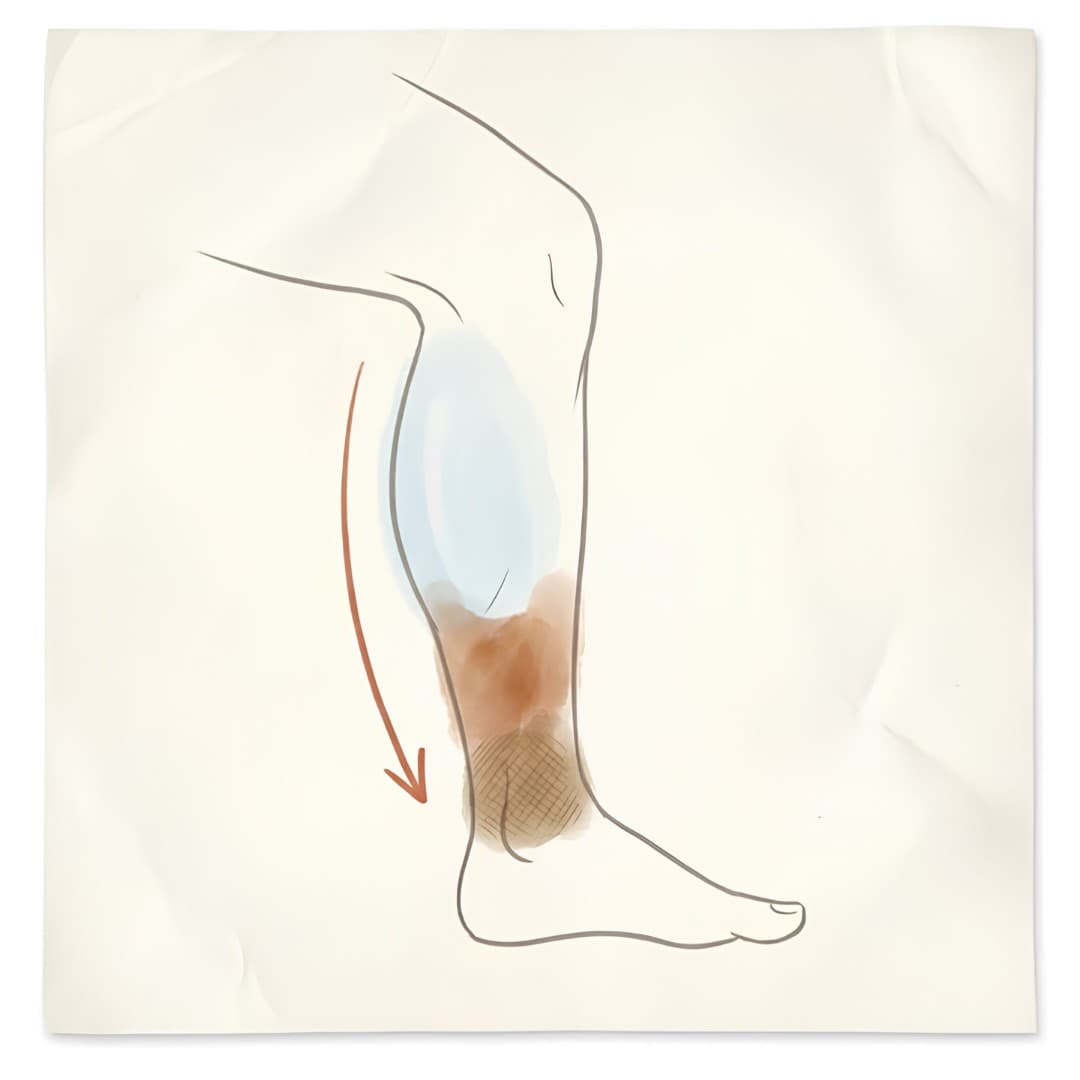
If you have a brown discoloration above your ankle that you’ve always called a bruise, it’s not a bruise. If the skin on your lower legs is itchy and no cream helps, it is not dry skin. I worked for 23 years as a specialized vascular nurse and lab technician, and I want to translate what your skin is really trying to tell you. Almost every woman hears that explanation for the first time in my consultation room, years after that conversation should have taken place. When a woman comes to me with brown discoloration above her ankle, itchiness that won’t go away, or a tight, dry feeling around her lower legs, she almost always says the same thing. "I thought it was a skin issue." I understand why. The symptoms are on the skin. The creams are meant for the skin. Of course it looks like a skin problem. But it isn’t a skin problem. It’s a vein problem that has been quietly developing on the inside for years and has finally become visible on the surface. My name is Claudia de Vries. I worked for 23 years as a specialized vascular nurse, the last nine years at a regional vascular clinic in Ontario. During that time, I examined more than four thousand women with chronic venous insufficiency. And four thousand times, I saw the exact same hopeless cycle: a ten-minute appointment where symptoms were brushed off, followed by ten years of the problem steadily worsening. In 2024, I stopped because I could no longer keep telling women the same story. What I discovered after that changed everything. But let me give you the translation first. Step by step. Because somewhere in this list is the stage your legs are in right now. Knowing where you stand changes everything about what you should do next. Phase One: The Itch This is the first thing most women notice and also the first thing they ignore. Itchiness around visible veins, usually on the lower leg. You buy a moisturizing cream. It helps for an hour. Then the itch comes back. Here is the translation: that itch is not caused by dry skin. It is your nerves protesting. The chronic pressure in your veins sets off an inflammatory process that damages the tiny blood vessels feeding the tissue around your veins. The cells in that tissue receive less oxygen than they need. Not dramatically less yet. Just... less. And the nerves in that tissue notice it first. The itch is their warning. The first one. The quietest. And the most important, because in this phase, almost everything is still reversible. Phase Two: A Tight and Dry Feeling As the process continues, inflammatory substances begin to break down the structure of the tissue itself, including the elastin and collagen that normally keep your skin and the layer beneath it supple and resilient. As a result, the skin begins to feel tight. Not because of the skin itself, but because the tissue underneath is losing its elasticity. And the skin feels dry because blood flow to the surface is steadily decreasing. Your moisturizing cream is now trying to solve a circulation problem. That isn't going to work. Phase Three: The Brown Discoloration This is usually the moment when women finally seek help. A brownish, sometimes reddish-brown spot above the ankle that doesn't fade. Most patients call it a bruise that won't heal, sun damage, or "just a part of aging." This is the translation, and I want you to hear this very clearly: that brown color is iron. The vein walls, weakened for years by that same inflammatory process, have become so damaged that red blood cells leak through them into the surrounding tissue. The iron from those cells deposits in your skin as a pigment called hemosiderin. You are looking at iron stains originating from your own leaking vein walls. That isn't cosmetic. That is your skin filing an official report: the walls in here are structurally damaged. Phase Four: Hardening If the process continues past phase three, the chronically inflamed tissue beneath the skin begins to scar from the inside out. The skin feels hard. Woody. Adhered to what's underneath instead of moving freely like healthy skin should. This is called lipodermatosclerose, and it tells me that the inflammation has been actively running unchecked for a very long time. Phase Five: The Ulcer Tissue that has received too little oxygen for years and has structurally broken down eventually does the only thing left. It gives out. The skin opens up. A venous ulcer forms—a wound that can take months to heal, if it heals at all, and often returns. That is the end of the sequence. And every patient who ends up there has first gone through phases one through four, usually with a jar of moisturizing cream in hand and the idea that it was a skin problem. Let’s lay out the translation one more time clearly. The itch? Early irritation of nerves by tissue receiving too little oxygen. The tight and dry feeling? Connective tissue being broken down by the inflammatory process. The brown spot? Iron leaking through damaged vein walls. The hardening? Years of inflammation turned into internal scar tissue. The ulcer? Tissue finally giving out. None of these complaints are skin problems. They all show, in a fixed order and at a predictable time, what the process is doing to your veins on the inside. I sat with patient files of women like Ingrid in front of me and felt something snap inside me. Ingrid had truly tried everything. For seven years, she wore prescription class 2 compression stockings. She hated them. She once told me she had to cry every morning when she put them on. She called them "the corset." For eighteen months, she took water pills that made her go to the bathroom nineteen times a day, while nothing changed around her ankles. Four different "miracle gels" from web shops, including a menthol cream so strong that her already sensitive skin burned so fiercely she had to wash it off crying at the sink. A visit to a private clinic where the duplex scan alone cost $220, followed by treatment advice she couldn't afford. After four years, she had spent more than $2,200 on treatments and products that hadn't changed a thing. And she still didn't dare wear a skirt. That evening, I stared at the kitchen wall and admitted something to myself that I had never been willing to face in 23 years of healthcare. Almost everything we prescribed targeted the wrong problem. The next four months, I barely slept. I read every study I could find. I spoke with colleagues from university medical centers and research institutes. I spent thousands of dollars of my own money on research, formulas, and test samples. And what I discovered made me furious. The entire North American market surrounding vein problems is built on a stubborn misunderstanding. This is what they prefer not to tell you: The reddish-brown discoloration around your ankles is not a skin disease. It is not eczema, nor is it routine skin irritation. It is iron from your own blood leaking out through damaged tiny blood vessels, breaking down in the surrounding tissue, and accumulating in your skin as a permanent discoloration. That substance is hemosiderin. In current dermatological guidelines, this is clearly named as a sign of chronic venous insufficiency. Vascular specialists in other countries speak openly about it. Yet almost no product in Canadian pharmacies or drugstores has ever explained to you what it actually is. Why? Because they can't keep selling you compression stockings and surface creams as if those tackle the underlying problem once you understand what's really happening. Those products never reach the place where the iron leaks from damaged vessel walls. They never could. Let me paint the picture for you. Imagine the veins in your legs are old garden hoses. For decades, everything works fine: blood flows down and is pumped back up. But after thirty, forty, or fifty years of gravity, pressure, and wear, small leaks can develop. At first, they are so small you notice nothing. Yet they are already there. At first, mostly fluid leaks into the surrounding tissue. This is phase one: fluid retention. By evening, your ankles swell. Your shoes start pinching. If you press a finger into your shin, the indent stays visible for a few seconds. You were probably told it was "just water retention" and that you should elevate your legs more often. But the underlying problem is often in the veins, not the kidneys. When the vessel wall weakens further, red blood cells can also leak through the tiny damaged spots into the surrounding tissue. There they break down and release iron. That iron accumulates in the skin as hemosiderin, causing the rust-brown discolorations you can't simply wash away. This is phase two: warmth and irritation. The skin can become warm, itchy, burning, and brown. If you are reading this because you recognize these symptoms, chances are high this is precisely what is happening to you. If nothing changes, the tissue can eventually become harder and stiffer. The skin and fat tissue underneath feel increasingly solid, almost like damp wood. A hard, fibrous border forms around the ankle. This is phase three: hardening. The medical term is lipodermatosclerose, an advanced stage where changes become increasingly difficult to reverse. Leading vascular researchers have been publishing for decades about disrupted microcirculation and the accumulation of iron-containing pigment in the skin. The science isn't new. The medical knowledge has been there for a long time. But this is the uncomfortable truth: a simple solution often yields less profit. Horse chestnut cannot be patented. And you cannot bill insurance companies $550 per treatment session for a roll-on someone applies at home themselves. Nor can you keep selling endless ten-minute appointments to women who no longer need them. And that precisely is why so many women stay trapped in the same cycle: family doctor, compression stockings, cream, back to the doctor, further testing, private clinic, laser treatment, recurring symptoms, and then everything starts over. It's actually a clever system. At least, if you don't view a 68-year-old woman who hasn't dared wear a skirt in six years as a human being, but as a revenue stream. The Breakthrough Almost Nobody Talks About Eleven weeks later, we tried it with Ingrid. In the third week, she called me. This time she wasn't crying out of frustration. She was crying because that morning, for the first time since the summer of 2018, she had put on pants above her ankles. Her granddaughter had told her, "Grandma, your legs look better." By the eighth week, the brown discoloration around her right ankle had visibly lightened. Not completely gone, but the edges were softer, the color less pronounced, and her skin felt less warm. We used an over-the-counter roll-on formulated with three specific botanical ingredients in carefully balanced proportions. The goal was to locally support the skin and underlying tissue around the tiny blood vessels. Not via the kidneys, not through external pressure like compression stockings, and not with the temporary cooling effect of a standard gel. Because we applied it directly to the problem area, we wanted to tackle three things at once. To genuinely address this problem, you must do three things simultaneously: Support the strength of weakened vessel walls The tiny leaks must not increase further. An important botanical component for this is aescin, a standardized extract from horse chestnut seed. Without this support, it's like mopping the floor while the faucet is still running. Help drain accumulated fluid and waste products from the tissue Centella asiatica, also known as gotu kola, is used to support the connective tissue surrounding the tiny blood vessels. The complete triterpene fraction, also called TTFCA, additionally supports the natural drainage of fluid through the lymphatic system. This allows the body to remove substances that have accumulated in the tissue. Without this step, fluid and iron-rich breakdown products remain trapped in the tissue. Soothe the burning, itchy, and tight skin without further burdening it This is precisely where many strongly cooling creams go wrong. Many products contain between three and ten percent menthol. On skin that is already sensitive or damaged, such a high concentration doesn't feel cooling—it feels irritating. Therefore, a carefully chosen dosage is important. In this case, carefully means well under one percent. Without the right dosage, even a supposedly "soothing" product can make the skin redder, more sensitive, and more vulnerable. If even one of these three components is missing, the problem is not fully addressed. That is why compression stockings alone are often not enough. They provide external pressure, but do not directly support the weakened vessel walls. The same goes for water pills. They help the body excrete more fluid, while the underlying problem is in the legs and not the kidneys. And that is why so many horse chestnut creams from the pharmacy or drugstore fell short: they often contain only one of the three important ingredients, sometimes combined with too much menthol, while Centella asiatica is completely absent. You need all three. Together and in carefully balanced proportions. Pushback From a Completely Unexpected Direction When it became known within the regional clinic that I was telling women about an external topical solution outside of standard coverage, the reaction was telling. An experienced medical specialist said over a cup of coffee—which was never really just about coffee—that I was treading on "dangerous ground." A pharmaceutical rep I had known for years suddenly stopped answering when I called. And I received a politely worded letter from a private clinic, drafted by a law firm, advising me to "moderate" my recommendations. They wanted me to stay silent because I had found something that could shake their entire business model. A simple topical roll-on that: — Focused on the underlying problem instead of just hiding the symptoms. — Could make a difference within days instead of months of appointments. — Cost less than a single duplex scan in a private clinic. — Gave women the ability to care for their legs at home, in their own bathroom. But what these profiteers hadn't counted on was that I had already found the developers. A small laboratory in southern Germany, where three biochemists and a Belgian phytochemist had been working in silence on precisely this problem for nearly six years. In July, I sat across from them at a table in Freiburg. I asked every critical and uncomfortable question I could think of. To every question, they had a convincing answer. The Product I Now Recommend to Every Patient It’s called VenaRoll. I didn't develop it. The team in Freiburg did. They've been working on it since 2019. I discovered it by accident through a former colleague who had been discreetly recommending it to her own patients for over a year. When I tested the formula first on Ingrid and then on six other women in my own practice, I knew. VenaRoll is the only topical roll-on I have found on the market that meets all three conditions simultaneously, with a single daily application of just sixty seconds. Standardized Horse Chestnut Extract (Aescin) Supports the strength of the tiny blood vessels right where leaks occur. Centella Asiatica (Gotu Kola, TTFCA) Supports the surrounding connective tissue and helps drain accumulated fluid and iron-rich waste products from the tissue. precisely dosed Menthol at 0.8% Cools burning and itchy skin without the risk of extra irritation from heavily concentrated menthol creams that may have already further strained your sensitive skin. All three. Working together in one roll-on. Apply it once a day. Just sixty seconds. Roll upward from your ankle to just below your knee, in the direction the blood flows back to the heart. Then just continue with your morning routine. No doctor's appointment. No long waitlist. No prior insurance authorization. No waiting room in a vascular clinic with magazines from 2019. Just you and your legs, finally getting the support they've been asking for all along. Relief. Support. Skin that increasingly looks like your own skin again. What I Discovered About This Company Before I Dared Recommend It Listen, I never attach my name to health products. Never. I have been approached often and turned down every request over the past six years. Before I referred even one person to this brand, I wanted to know precisely who I was sending her to. I had the lab certificates checked. I researched the developer's background. I found out why less than 0.1% of their customers requested refunds, while that percentage for many leg care products on major web shops hovers around fifteen percent. This is what I discovered: The laboratory is registered with the competent regulatory authority and is ISO 22716-certified for cosmetics manufacturing. That is the same quality standard major pharmacy brands use. The lead developer is a phytochemist with nineteen years of experience in the research department of a company many readers will recognize. The horse chestnut comes from a single dedicated supplier that also supplies pharmacies. No cheap bulk ingredients. Customer service picks up the phone quickly. I tested this myself multiple times. They produce in small batches. From raw material to finished product takes about six weeks. No fillers, no parabens, no MSM, no alcohol, and no fragrance. In 23 years, I've seen how this industry tries to cut corners everywhere. This team doesn't do that. That is why I am willing to attach my name to VenaRoll. How VenaRoll Supports Your Legs During the First 7 Days When you apply VenaRoll in the morning around your ankle, here is what happens under your skin: Minute 0 to 10: The Cooling Phase The precisely dosed menthol at 0.8% activates the cold-sensitive TRPM8 receptors in the skin. These are the same receptors that react to cold water. At a concentration of 0.8%, the risk of chemical irritation remains limited. The burning sensation subsides. That deep, persistent itch calms down. Most women notice this within three to five minutes. You aren't imagining it. This is a real neurological signaling process. Day 1 to 3: The Calming Phase Aescin begins reaching the walls of the tiny blood vessels. The minor leaks don't repair overnight—that would be impossible. But further deterioration can be slowed down. Toward evening, swelling may be less pronounced. The indent left when pressing a finger into your skin disappears faster. Perhaps you can wear the same shoes all day without needing to switch to slippers halfway through the afternoon. Day 4 to 7: The Recovery Phase Now Centella asiatica begins delivering its full supporting action. Accumulated fluid and iron-rich waste products in the tissue slowly begin to move. The brown discolorations don't vanish instantly. I want to be very clear about that. But redness around the brown spots, that warm and irritated border, can become less pronounced. The skin begins to look calmer. Less red. Less sensitive. And increasingly like your own skin. After two weeks of consistent daily use, you wake up one morning, walk barefoot to the kitchen, and someone—your partner, your daughter, or your grandchild—looks at your legs. And that person says, "Your legs look better, don't you think?" After 23 years in healthcare, that is the moment that truly matters to me. Not what a measurement shows. Not what's on a duplex scan. But the moment someone who has loved you for decades looks at you and notices the difference. What More Than 10,000 Women Have Experienced Over ten thousand women have now used VenaRoll. Before attaching my name, I asked the team to share all available customer data with me. These were the results: 89% reported clearly less swelling by the end of the day within the first two weeks. 76% stated that the burning and itching sensation had noticeably decreased by the third day. 81% were using at least one other product less after ten days or had stopped entirely—such as compression stockings, gel, or a supplement. But the figure that truly convinced me: less than 1% requested a refund. The founder told me with a straight face that included two women whose cat had knocked the bottle off the bathroom shelf. But you don't have to take my word for it. Monique S. — Verified Purchase I just want to say I tried four different horse chestnut creams from the pharmacy over the past two years. None worked. I don't know what makes this one different, but the burning sensation at night is gone. For the first time since the pandemic, I sleep with my legs outside the covers. Thank you so much. Sabine B. — Verified Purchase Doctors kept saying I had to live with it. Just learn to live with it. As though I had a choice. I started in March. By late April, I wore open shoes to a friend's funeral. It might sound strange to be happy about that, but it was the first nice pair of shoes I'd worn outside in three summers. On the way back, I cried in the car. Gisella J. — Verified Purchase I was skeptical. Over the past six years, I bought almost every leg gel I could find online, but nothing helped. My daughter ordered this for me after reading about it online. I used it for nine days before I noticed a difference. When I stepped out of the bath, I saw my ankle in the mirror and thought, "So that's what my ankle is supposed to look like." I hadn't been able to say that for ten years. What Chronic Vein Problems Actually Cost Let me show you what treating this problem can cost in practice. The route via conventional care: The first family doctor appointment ends after ten minutes with: "Just wear compression stockings." Stockings cost between $25 and $60 per pair and need to be replaced about every six months, for years. Five years of stockings costs roughly $600 to $800, apart from the daily effort of pulling them on every morning. And the brown discoloration often keeps worsening because stockings don't directly address the underlying problem. The route via a private clinic: An initial private consult costs $250 to $400. A duplex scan costs $250 to $500. Sclerotherapy costs $600 to $1,000 per treatment, usually three to five treatments. Endovenous laser treatment costs $2,500 to $3,500 per leg. And the chance of symptoms returning within five years can be substantial, though that isn't always discussed before you pay. Realistic total costs for both legs including aftercare: $6,000 to $9,000, with no guarantees. The route via supplements and gels: Horse chestnut tablets cost $25 to $50 per month, indefinitely. Cooling leg gels from the pharmacy cost $15 to $35 per tube and last about three weeks. Trying various products for four years totals roughly $1,200 to $2,000. And you usually end up back at the family doctor anyway, while the brown discolorations have increased further. Clinics thrive on this system. Every product that doesn't work leads you to the next, more expensive step. Cream doesn't work? Then tablets. Tablets don't work? Stockings. Stockings insufficient? Laser treatment. Treatment not enough? Repeat. It's a business model built on the slow decline of your own legs. You are standing at an important crossroads right now. Route One: You continue as you are. You keep struggling with compression stockings every morning. You keep buying horse chestnut gel at the pharmacy while noticing barely any difference. You keep canceling vacations because you don't want to be the one wearing long pants at the beach. And you remain a reliable revenue stream for an industry that profits every month from nothing changing for you. Route Two: You try something focused on the underlying problem. You receive a roll-on already used by tens of thousands of women. You focus your attention on what lies behind the symptoms rather than just temporarily masking what's visible. And tomorrow morning you wake up with a bit of hope instead of the same quiet worry. For me, the choice is clear. Because let's be honest. Chronic venous insufficiency can worsen over time. If nothing changes, symptoms are likely to increase further. You can keep spending money on products that do nothing for the real problem and ultimately face hardened ankles, lipodermatosclerose, or open wounds. Or you make the practical decision to try VenaRoll and give yourself at least a fair chance to better support your legs. How to proceed: Grab VenaRoll on the first morning after your order arrives. Apply the roll-on once. Sixty seconds. And go on with your day. Send the team a message after three weeks and tell them what your partner said when they noticed the difference. But whatever you do, don't close this page thinking, "I'll order it later." "Later" doesn't help when your legs feel warm, heavy, and discolored on a Tuesday evening in November. "Later" might mean wearing long pants for yet another summer. "Later" might mean choosing clothes that completely hide your ankles at yet another wedding. Your legs have waited long enough. With hopeful regards, Claudia de Vries Registered Nurse and former specialized vascular nurse, New York P.S. Ingrid sent me a photo this morning. She's standing in her garden in a knee-length summer dress with her granddaughter in her arms. Her ankles are clearly visible. In twelve weeks, you might be looking at your legs with that same quiet confidence. But you have to start today. P.P.S. I have now pointed more than 380 former patients to VenaRoll. I receive no commission for this. I hold no shares in the company and am not on their payroll. I simply couldn't stand watching women get bounced from family doctor to vascular clinic to pharmacy and back again without ever feeling like their real problem was understood. The research exists. The lab exists. And the experiences of women like Ingrid are real. P.P.P.S. One more time, for complete clarity: there is no "extended offer." There is no second chance email coming tomorrow. If you close this page, the situation may have changed when you return. Your legs have been telling you their story for years. Today is the day you finally act on it.
Call to action: Learn more
Creative notes
Ad details
Original creative belongs to Sophia Bennett. Recreate the idea with your own copy and imagery.